
There's no real secret — just time, precision, and a refusal to cut corners. Here's how we've been making our dough since day one.
The flour: the choice that changes everything
We use type 00 flour with a protein content of around 12–13 %. Too low, and the dough tears. Too high, and it fights back when you stretch it. We've sourced from an Italian mill for three years now — the consistency of an artisan mill flour shows immediately in how the dough holds together.
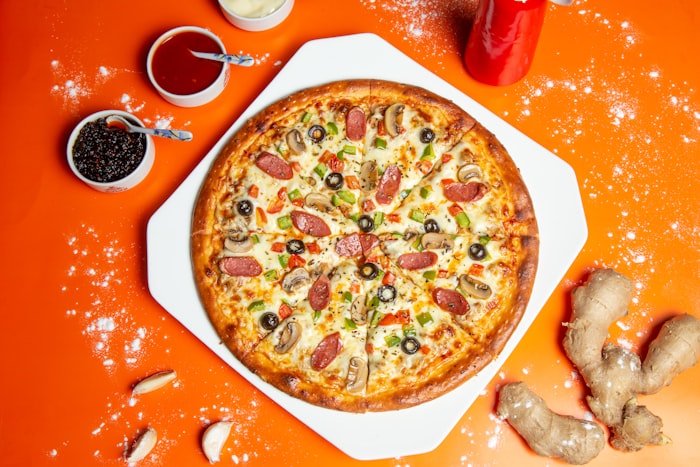
The base recipe (makes 4 pizzas)
- 500 g type-00 flour
- 325 ml cold water (65 % hydration)
- 10 g fine salt
- 1 g active dry yeast (no more)
Order matters: dissolve the yeast in water first, add half the flour, then the salt, then the rest of the flour. Salt in direct contact with yeast inhibits it — hence the order.
Long fermentation: the real ingredient
Knead for around 10 minutes by hand until smooth and non-sticky. Then the dough rests for 24 hours in the fridge in an airtight container. This slow fermentation develops flavour and improves digestibility — two things a quick room-temperature rise can't give you.
"Dough that has had time tastes different. It's lighter, more fragrant, and it bubbles better in the oven."
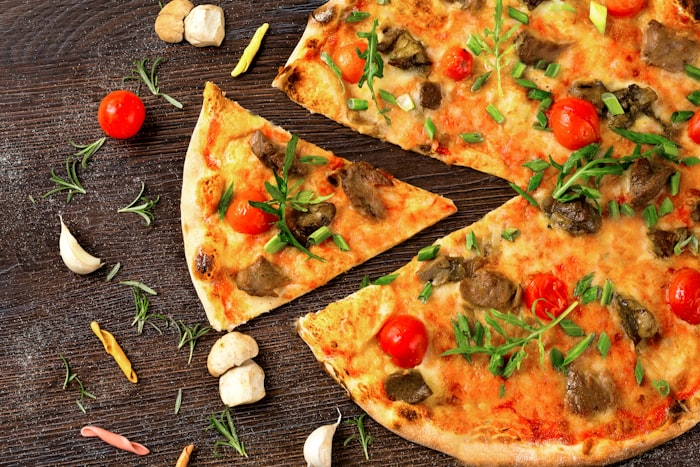
Hand-stretching
We never touch a rolling pin here. The dough is stretched by hand, working from centre to edge with fingertips, then lifted and stretched over closed fists. Target: a 28–30 cm disc, thicker at the edge (the cornicione) and thin in the centre.
The bake: hot, fast, no compromise
Our wood-fired oven runs at 450–480 °C. A pizza bakes in 60–90 seconds. At home, preheat your oven to its maximum with a baking stone or inverted tray on the lowest rack, and count 7–9 minutes. Different — but still very good.